

Discover how thermal transfer ribbons are made: Behind the scenes of manufacturing
A Thermal Transfer ribbon (TTR) may look like a simple roll of thin plastic film, but it is a highly engineered, multi-layer chemical product. Understanding how ribbons are manufactured explains why production quality directly impacts print legibility, barcode scannability, and printhead longevity.
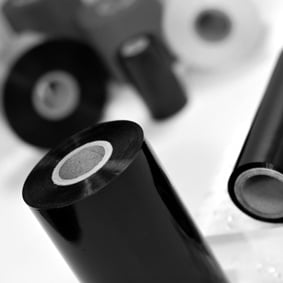
As one of the few global companies mastering every stage of ink design and thermal transfer ribbon manufacturing, from conception to market, ARMOR-IIMAK applies strict industrial precision across all production phases.
What materials are thermal transfer ribbons made of? (In-depth chemical breakdown)
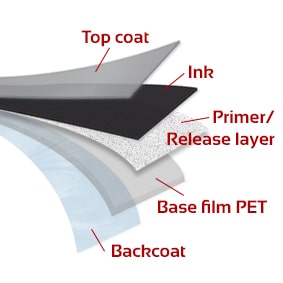
While general guides outline basic ribbon components, the physical composition of a high-performance roll relies on seven distinct chemical and mechanical layers engineered to sub-micron tolerances:
- Backcoat layer: A proprietary silicone-based formulation applied at sub-micron thickness. It eliminates printhead friction, neutralizes electrostatic discharge, and acts as a thermal barrier to protect heater elements from burn-out.
- Polyester carrier film (PET): A bi-oriented polyethylene terephthalate substrate chosen for high tensile strength, extreme resistance to heat distortion, and uniform thermal conductivity under high winding torque.
- Release layer: A heat-sensitive sub-layer (wax or polymeric compound) engineered to melt at a precise micro-temperature threshold, allowing instant, clean separation between the PET base and the ink.
- Ink layer: A micro-milled chemical formulation combining pigments, synthetic resins, and waxes. Applied in single or multiple coats, it dictates optical density, scratch resistance, and solvent tolerance.
- Leader: A specialized coated PET film strip spliced at the roll head to shield the active ink from environmental contamination, prevent static charge during loading, and eliminate setup wastage.
- Trailer: A metallic or opaque optical strip spliced at the roll end that triggers photoelectric transmission sensors to halt printer execution before dry friction damages the printhead.
- Core: A high-precision cardboard or plastic core with tight inner diameter tolerances notched for exact drive shaft engagement to prevent slippage under high acceleration.
The 4 core manufacturing steps at ARMOR-IIMAK
Transforming raw chemical ingredients into high-precision thermal transfer rolls requires end-to-end industrial execution across four technical phases:
1. Advanced R&D, chemical milling, and ink production
Ribbon quality depends on component selection, chemical properties, and particle dispersion. ARMOR-IIMAK’s R&D team of over 40 specialists utilizes high-precision bead milling equipment to achieve microscopic particle uniformity. This microscopic dispersion guarantees consistent ink release, prevents printhead clogging, and maintains uniform optical density across millions of linear meters.

2. Cleanroom coating and solvent management
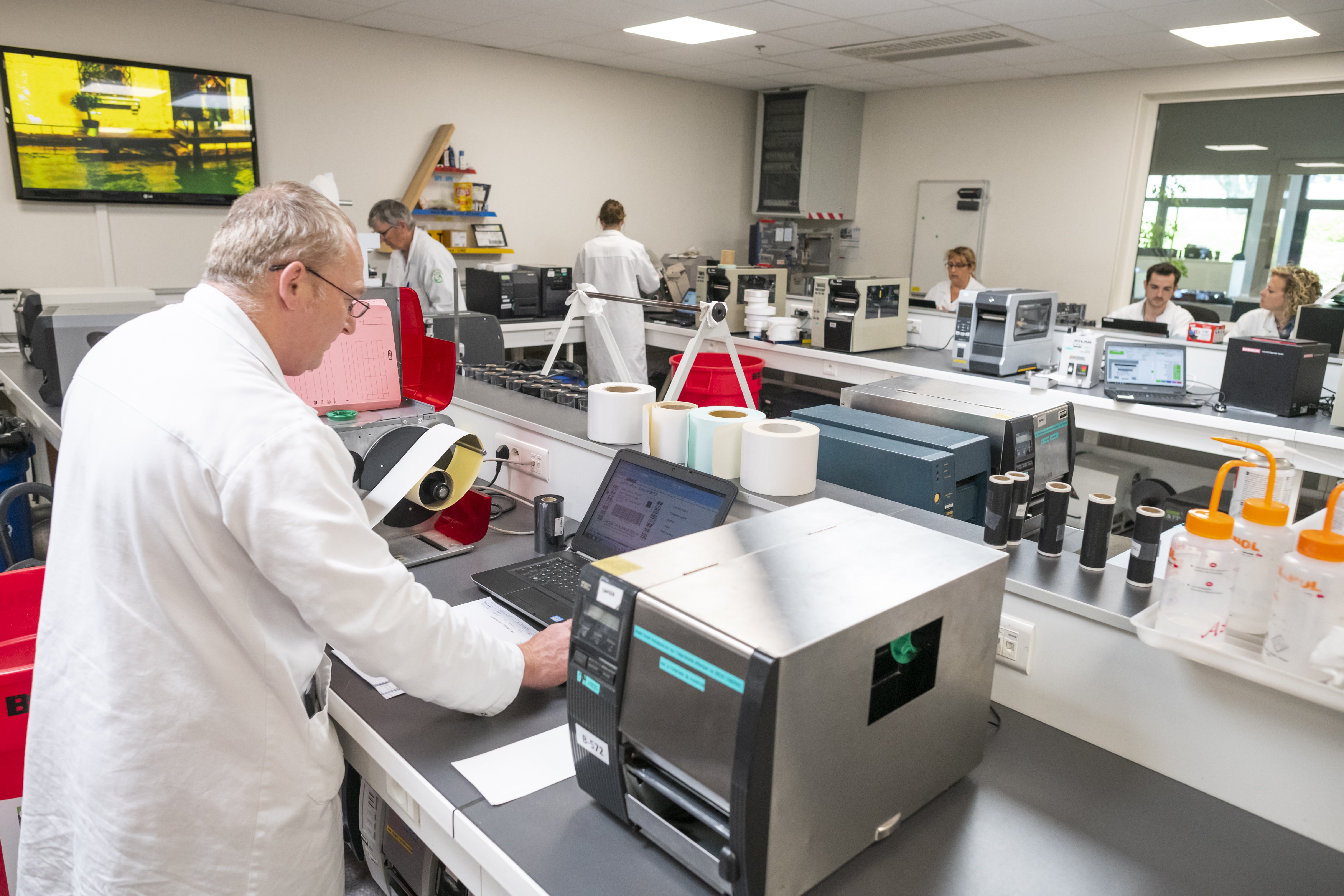
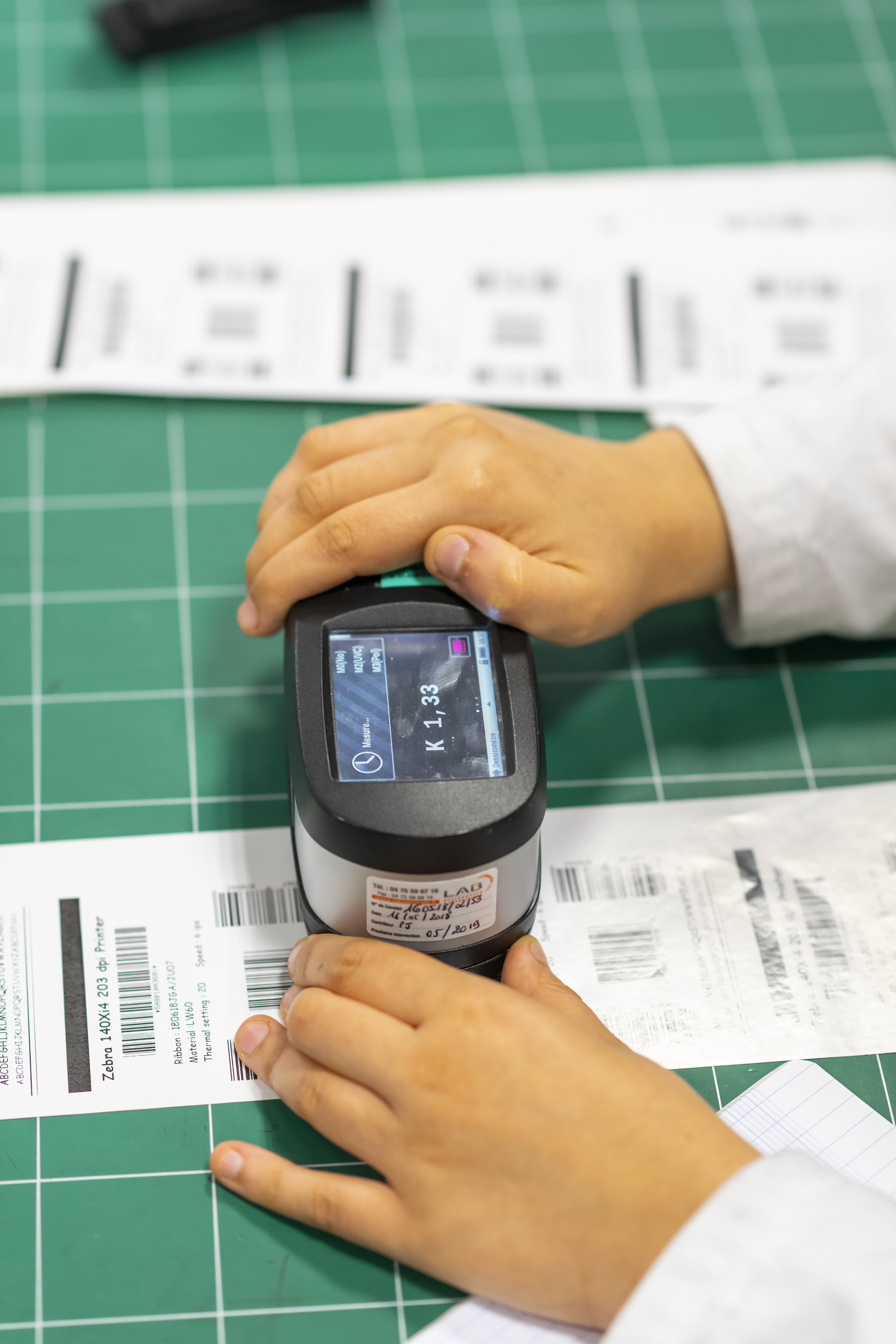
In controlled cleanroom environments, PET carrier film moves through high-speed coating lines. Industrial coating heads apply the backcoat formulation to one side and single or multi-layer ink coats to the other. Thickness is monitored online via precision gauge sensors to maintain sub-micron accuracy. Advanced thermal recovery systems capture and recycle evaporating solvents, supporting sustainable production standards.
In controlled cleanroom environments, PET carrier film moves through high-speed coating lines. Industrial coating heads apply the backcoat formulation to one side and single or multi-layer ink coats to the other. Thickness is monitored online via precision gauge sensors to maintain sub-micron accuracy. Advanced thermal recovery systems capture and recycle evaporating solvents, supporting sustainable production standards.

3. Precision slitting and dynamic tension control
Master rolls are transferred to automated slitting stations. Precision rotary knives cut the film into exact customer widths and lengths matching flat-head or near-edge printer specifications. Closed-loop tension control systems dynamically adjust winding torque to prevent ribbon telescoping, edge fraying, or internal wrinkling.
4. Automated packaging, optical inspection, and batch traceability
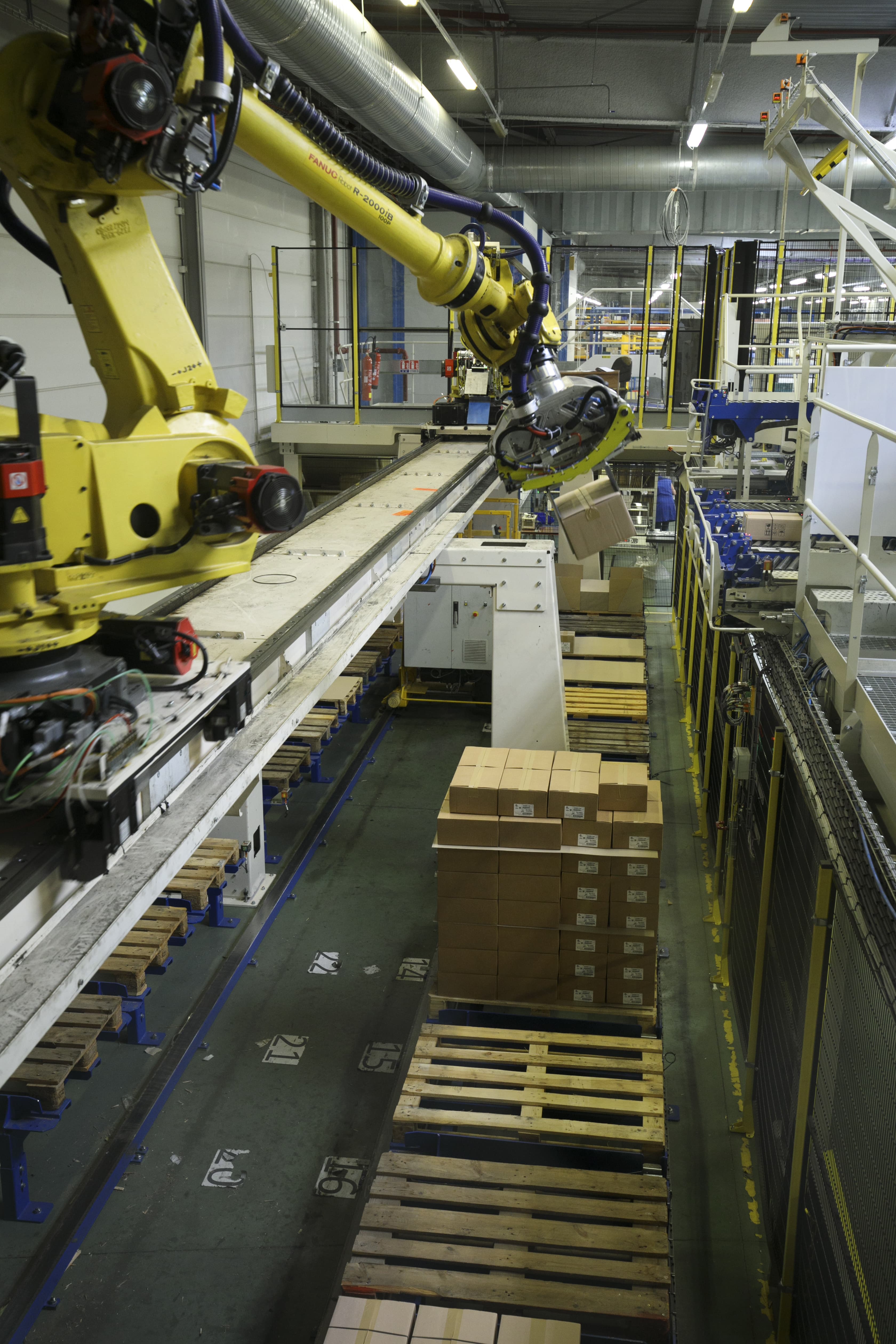
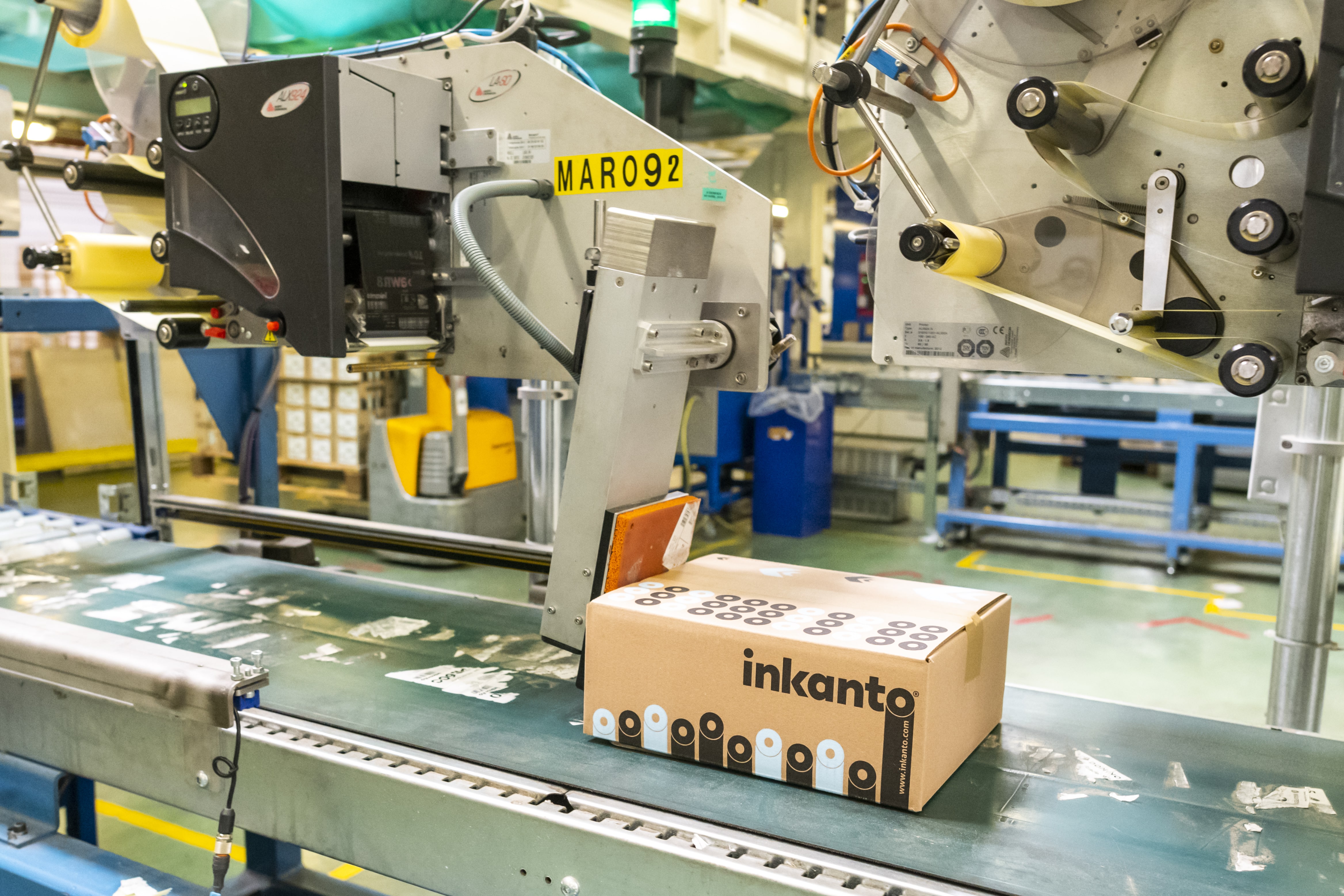
Robotic assembly lines fit finished rolls with core components, leaders, and protective anti-static wrapping. Every batch undergoes automated optical inspection to verify surface quality, while full ERP batch integration guarantees complete material traceability from raw chemical input to the customer’s printer.

Chemical formulations: Wax vs. wax-rein vs. resin
- Manufacturing parameters adapt to the required durability level and heat sensitivity required for specific labeling applications:
- Wax formulations: Paraffin and carnauba-based ink matrices engineered with low melting thresholds. Optimized for high-speed printing on standard vellum and coated paper labels.
- Wax-resin formulations: Hybrid chemical blends incorporating synthetic resins with intermediate thermal sensitivity. Delivers superior smudge and scratch resistance on coated papers, glossy stocks, and synthetic films.
- Resin formulations: Pure synthetic resin matrices requiring higher printhead energy. Engineered for extreme resistance against harsh chemicals, outdoor UV exposure, and heavy mechanical abrasion on synthetic substrates and textiles.
Technical specifications and printer architecture compatibility
ARMOR-IIMAK subjects every ink formulation to standardized testing protocols across major printer hardware architectures:
- Flat-head hardware: Certified for conventional printhead technologies (203 dpi, 300 dpi, 600 dpi) from Argox, Zebra, CAB, Carl Valentin, Citizen, Datamax O’Neil, Intermec, Italora, Logopak, Printronix, Sato, TSC, and Toshiba. ,
- Near-edge hardware: Engineered for high-speed inline packaging systems utilizing floating printhead technology, including Avery Dennison, Bell-Mark, CAB, Carl Valentin, Domino, Kortho, Linx, Logopak, Markem-Imaje, Toshiba, and Videojet.
Looking for a broader overview of ribbon selection, substrate matching, and industry applications? Read our complete guide on what thermal transfer ribbons are.
Need expert advice on ribbon selection or looking to buy ARMOR-IIMAK products? Contact our technical team today to find the right partner for your project.